


Publié sur Google
 Gael92 days ago
Trustindex vérifie que la source originale de l'avis est Google.
Un super cabinet, très compétents et agréables ! Ils m'on sorti de très mauvais pas en urgence ! C'est un plaisir d'y retourner, merci !Publié sur Google Godefroy Douglas108 days agoAprès un traitement dentaire de vingt mois, le cabinet dentaire a été excellent et le résultat top. Vraiment Top 👌. Hygiéniste top. Accueil excellent. Ortho alignement dentaire excellent. Implants vraiment top 👌 et en plus sans douleur. Suivi et accompagnement et contrôle tout au long du traitement. Je recommande ce cabinet dentaire à toutes les familles, et de toutes âges. J'ai retrouvé un excellent sourire Et un énorme merci 🫶👍Publié sur Google
 Richard Wiley121 days agoI have had surgical and cosmetic procedures carried out at this Cabinet and my experience has been excellent. They have the most up to date technology as well as experienced, professional, multi lingual and caring staff. I wholeheartedly recommend this Team.Publié sur Google
 L Accueil de Soi121 days agoPublié sur Google
 Aline Sidoti123 days agoPublié sur Google
 Cathy Feruglio198 days agoJe recommande vivement ce cabinet dentaire. On y est reçu avec de beaux sourires chaleureux. Le dr M. Banica Cerreoni est très gentil et travaille méticuleusement en expliquant bien toutes les étapes et en plus je n’ai eu aucune douleur. Tout est fait pour que l’on se sente bien👌 Merci ☺️Publié sur Google
 Gonçalo Peixe231 days agoJ'ai dû dévitaliser deux dents, ce qui a nécessité un traitement long et intense. Cependant, dès le début, toute l'équipe m'a mis à l'aise. Pour ceux qui n'aiment pas le dentiste, je recommand. l y a des téléviseurs pour se distraire pendant les soinsPublié sur Google
 Chri Walcher312 days agoPublié sur Google
 Claudia Suter312 days agoThis is the best dentist I have ever been to. The whole staff is highly professional, works very carefully, gives detailed explanations, works with the patient to achieve the best results, acting always in the best interest of the patient. This cabinet did solve my problem and make sure my pariodontal issue and the detartrage is being handled properly, with modern technology and very good dentist skills and with the best care. I strongly recommend this cabinet de dentistes.Publié sur Google
 Daniel Schmid319 days agoCela fait au moins 30 ans que je suis patient et je continu à faire confiance au Dr Mihai Banica Cerreoni et Cristina Ruopolo hygiéniste dentaire car leurs conseils, leur professionnalisme et la qualité de leurs soins m’ont toujours donné entière et pleinement satisfaction.
Treating gum disease in Nyon
Periodontitis (gum infection)
Periodontitis, or periodontal disease, is a chronic gum infection that causes the destruction of the bone and gums around the teeth. It is an insidious disease because it presents no symptoms. It is progressive and leads to tooth loss. It can be dangerous for the body because the bacteria that cause it may affect the heart, kidneys, or foetus.


The cause of periodontitis
Periodontitis is caused by certain bacteria known as periodontal bacteria. Although these periodontal bacteria are naturally present in the mouth, they only become harmful when they increase significantly in number under certain conditions.
This happens when a layer of bacteria and food debris, called bacterial plaque, builds up on the teeth and remains undisturbed, usually in areas that are difficult to reach, such as between the teeth.
As the disease progresses, chronic inflammation gradually causes the destruction of the jawbone, eventually leading to tooth loss.
Nevertheless, for most people, periodontitis is a slow and progressive process that develops over many years and can be stopped if it is detected and treated in time.
However, some young adults develop a very active form of the disease that causes teeth to loosen and be lost prematurely.
It is essential to understand that, without the accumulation of bacterial plaque, periodontitis will not occur.
Contact us to book your first visit, ask for information or discuss the treatment that best fits your situation.
Publié sur GoogleGael92 days agoUn super cabinet, très compétents et agréables ! Ils m'on sorti de très mauvais pas en urgence ! C'est un plaisir d'y retourner, merci !Publié sur GoogleGodefroy Douglas108 days agoAprès un traitement dentaire de vingt mois, le cabinet dentaire a été excellent et le résultat top. Vraiment Top 👌. Hygiéniste top. Accueil excellent. Ortho alignement dentaire excellent. Implants vraiment top 👌 et en plus sans douleur. Suivi et accompagnement et contrôle tout au long du traitement. Je recommande ce cabinet dentaire à toutes les familles, et de toutes âges. J'ai retrouvé un excellent sourire Et un énorme merci 🫶👍Publié sur GoogleRichard Wiley121 days agoI have had surgical and cosmetic procedures carried out at this Cabinet and my experience has been excellent. They have the most up to date technology as well as experienced, professional, multi lingual and caring staff. I wholeheartedly recommend this Team.Publié sur GoogleL Accueil de Soi121 days agoPublié sur GoogleAline Sidoti123 days agoPublié sur GoogleCathy Feruglio198 days agoJe recommande vivement ce cabinet dentaire. On y est reçu avec de beaux sourires chaleureux. Le dr M. Banica Cerreoni est très gentil et travaille méticuleusement en expliquant bien toutes les étapes et en plus je n’ai eu aucune douleur. Tout est fait pour que l’on se sente bien👌 Merci ☺️Publié sur GoogleGonçalo Peixe231 days agoJ'ai dû dévitaliser deux dents, ce qui a nécessité un traitement long et intense. Cependant, dès le début, toute l'équipe m'a mis à l'aise. Pour ceux qui n'aiment pas le dentiste, je recommand. l y a des téléviseurs pour se distraire pendant les soinsPublié sur GoogleChri Walcher312 days agoPublié sur GoogleClaudia Suter312 days agoThis is the best dentist I have ever been to. The whole staff is highly professional, works very carefully, gives detailed explanations, works with the patient to achieve the best results, acting always in the best interest of the patient. This cabinet did solve my problem and make sure my pariodontal issue and the detartrage is being handled properly, with modern technology and very good dentist skills and with the best care. I strongly recommend this cabinet de dentistes.Publié sur GoogleDaniel Schmid319 days agoCela fait au moins 30 ans que je suis patient et je continu à faire confiance au Dr Mihai Banica Cerreoni et Cristina Ruopolo hygiéniste dentaire car leurs conseils, leur professionnalisme et la qualité de leurs soins m’ont toujours donné entière et pleinement satisfaction.
Periodontitis is a serious condition
On closer examination, the condition of our mouth can be considered a mirror of the general condition of our body, and our periodontal health can often tell us more about our overall health than just the condition of our gums.
Although periodontitis is always triggered by the accumulation of plaque on the teeth, diseases affecting the rest of the body, known as systemic diseases, can also weaken the supporting structures of our teeth.
In addition, it is important to know that some serious disorders are known to manifest in the mouth before appearing in other parts of the body. As a result, a qualified periodontist may sometimes be the first to detect signs of a general health condition, such as diabetes or blood disorders, when examining a patient’s mouth.


Recognising periodontitis
If left untreated, gingivitis can progress to periodontitis, which often presents no obvious warning signs. However, certain changes may occur over time and alert you:


Screening

Your needs, questions and expectations deserve careful attention. At Cabinet Dentaire de Nyon, our team listens to you, explains every step clearly and helps you choose the most suitable path for your oral health.
Contact us to book your first visit, ask for information or discuss the treatment that best fits your situation.
Prevention of periodontitis
Fortunately, periodontal inflammation can be prevented.
You can prevent the development of gingivitis and periodontitis by adopting effective oral hygiene habits and having regular professional check-ups and cleanings.
Here are the basic elements of a good oral hygiene routine:
- clean the chewing surfaces and sides of the teeth twice a day with a toothbrush (of the appropriate size and in good condition) and toothpaste;
- clean the spaces between the teeth once a day (areas that cannot be reached by the toothbrush bristles) using dental floss or an interdental brush suited to the size of the space
Dental floss should be used when the teeth are close together, with little or no space between them, while an interdental brush should be used for wider spaces.
It is important to take particular care when cleaning crooked or crowded teeth, as well as around fillings, crowns and dental prostheses, because plaque can easily build up in these hard-to-reach areas.
Antibacterial mouthwashes are a useful addition to brushing, as they inhibit bacterial growth and reduce inflammatory changes. Mouthwash should be used after brushing the teeth.
If, as a result of an inadequate cleaning technique, plaque deposits remain on the teeth, they mineralise and turn into hard, fixed deposits (tartar) that can no longer be removed with a toothbrush. Your dentist or periodontist will identify these tartar deposits during your regular dental check-up and remove them as part of a professional cleaning. Once the deposits have been removed, the teeth will be polished to create a smooth surface that is less likely to accumulate plaque.
The consequences of periodontitis
Periodontitis is the leading cause of tooth loss. If the progression of periodontal inflammation is not stopped, the supporting structures of the teeth, including the surrounding bone, are destroyed. As a result, the teeth eventually become loose and are lost, or they need to be extracted. In addition, other problems may occur in some patients, including painful abscesses, shifting of the teeth that can interfere with eating, and an unattractive lengthening of the teeth with exposed roots due to gum recession.
It is now recognised that untreated periodontal diseases can affect general health, such as increasing the risk of complications during pregnancy (pre-eclampsia, premature birth or low birth weight) and the risk of heart disease or diabetes.
In summary, here is a good dental hygiene routine:

Morning and midday
Brushing for 2 minutes (electric brushing time), mouthwash
Evening
floss/interdental brush, brushing, mouthwash
Contact us to book your first visit, ask for information or discuss the treatment that best fits your situation.
Publié sur GoogleGael92 days agoUn super cabinet, très compétents et agréables ! Ils m'on sorti de très mauvais pas en urgence ! C'est un plaisir d'y retourner, merci !Publié sur GoogleGodefroy Douglas108 days agoAprès un traitement dentaire de vingt mois, le cabinet dentaire a été excellent et le résultat top. Vraiment Top 👌. Hygiéniste top. Accueil excellent. Ortho alignement dentaire excellent. Implants vraiment top 👌 et en plus sans douleur. Suivi et accompagnement et contrôle tout au long du traitement. Je recommande ce cabinet dentaire à toutes les familles, et de toutes âges. J'ai retrouvé un excellent sourire Et un énorme merci 🫶👍Publié sur GoogleRichard Wiley121 days agoI have had surgical and cosmetic procedures carried out at this Cabinet and my experience has been excellent. They have the most up to date technology as well as experienced, professional, multi lingual and caring staff. I wholeheartedly recommend this Team.Publié sur GoogleL Accueil de Soi121 days agoPublié sur GoogleAline Sidoti123 days agoPublié sur GoogleCathy Feruglio198 days agoJe recommande vivement ce cabinet dentaire. On y est reçu avec de beaux sourires chaleureux. Le dr M. Banica Cerreoni est très gentil et travaille méticuleusement en expliquant bien toutes les étapes et en plus je n’ai eu aucune douleur. Tout est fait pour que l’on se sente bien👌 Merci ☺️Publié sur GoogleGonçalo Peixe231 days agoJ'ai dû dévitaliser deux dents, ce qui a nécessité un traitement long et intense. Cependant, dès le début, toute l'équipe m'a mis à l'aise. Pour ceux qui n'aiment pas le dentiste, je recommand. l y a des téléviseurs pour se distraire pendant les soinsPublié sur GoogleChri Walcher312 days agoPublié sur GoogleClaudia Suter312 days agoThis is the best dentist I have ever been to. The whole staff is highly professional, works very carefully, gives detailed explanations, works with the patient to achieve the best results, acting always in the best interest of the patient. This cabinet did solve my problem and make sure my pariodontal issue and the detartrage is being handled properly, with modern technology and very good dentist skills and with the best care. I strongly recommend this cabinet de dentistes.Publié sur GoogleDaniel Schmid319 days agoCela fait au moins 30 ans que je suis patient et je continu à faire confiance au Dr Mihai Banica Cerreoni et Cristina Ruopolo hygiéniste dentaire car leurs conseils, leur professionnalisme et la qualité de leurs soins m’ont toujours donné entière et pleinement satisfaction.
Risk factors for periodontitis
There are a number of factors that increase the risk of developing periodontitis and may contribute to its progression, such as stress or certain systemic diseases such as diabetes and smoking.
Smokers are significantly more likely to develop periodontitis than non-smokers.
Periodontal treatments (e.g. gum or bone grafts, implants) are less effective in smokers than in non-smokers due to less effective healing.
In smokers, periodontitis progresses much faster, with more rapid tooth loss.
Around 90% of cases of periodontitis that do not respond to treatment involve smokers.


Treatment of periodontitis
Oral hygiene instructions and advice
The aim of the initial treatment phase is to reduce the number of bacteria in the mouth and therefore decrease the level of inflammation.
Your dentist or hygienist will first explain the causes of your periodontitis and show you exactly how to keep your teeth and gums clean. They will give you individual advice on how to use the different cleaning methods as effectively as possible (e.g. the most appropriate toothbrushing technique, correct use of dental floss and interdental brushes).

Gum reconstruction (gum graft)
Following trauma or infection, the gum may recede and put the health of the teeth or implants at risk, or simply cause an aesthetic concern.
There are several procedures that can help to “correct” these undesirable situations. The most appropriate treatment will be chosen by the specialist surgeon to achieve the following objectives:
1. restore aesthetics
2. reduce sensitivity
3. increase the lifespan of the implant
4. improve the prognosis of the tooth

Course of periodontal treatment


What is periodontitis and what causes it?
What is periodontitis and what causes it?
Periodontitis is an inflammation that affects the tissues supporting the teeth. At Cabinet Dentaire de Nyon, Dr Mihai Banica Cerreoni explains that it often begins with the accumulation of plaque and tartar near the gums. If these deposits are not removed, the bacteria can cause bleeding, swelling, periodontal pockets, bone loss, and tooth mobility.
Why does periodontitis occur?
Why does periodontitis occur?
Periodontitis generally occurs when bacterial plaque remains around the teeth and gums for too long, but several factors can increase the risk. Inadequate brushing, tartar, smoking, diabetes, genetic predisposition, stress, hormonal changes, or certain medications can influence gum health. The disease can progress slowly, often without severe pain at first.
This is why regular check-ups, professional cleaning, pocket measurements, risk assessment, and personalised advice are important. Identifying the cause helps ensure proper treatment. If you experience bleeding, book an appointment for Periodontitis in Nyon.
Oral health and general health
Oral health and general health
Gum health is linked to general well-being, as chronic inflammation in the mouth can contribute to the body’s overall inflammatory balance. Periodontal problems are often discussed in relation to diabetes, cardiovascular risks, and oral changes during pregnancy. Dental follow-up does not replace medical care, but it helps maintain a healthier oral environment. The team monitors gum bleeding, periodontal pockets, bacterial plaque, systemic factors, and maintenance needs. Patients concerned may benefit from closer monitoring. Book an appointment for Periodontitis in Nyon.
What are the different types of periodontal disease?
What are the different types of periodontal disease?
Periodontal disease can present in several forms. Gingivitis affects the gums and often causes redness, swelling, or bleeding, especially when brushing. Periodontitis is deeper and can affect the bone as well as the tissues that support the teeth. Some patients experience slow progression, while others show more rapid progression. The dentist assesses level of inflammation, pocket depth, bone support, tooth mobility, and risk factors before defining the treatment. Each situation requires appropriate management. For a clear diagnosis, consult us for Periodontitis in Nyon.
What are the symptoms of gum disease?
What are the symptoms of gum disease?
Gum disease can be subtle at first, but certain signs should raise concern. Common symptoms include bleeding when brushing, swollen gums, persistent bad breath, gum recession, sensitivity, loose teeth, or a change in the bite. Pain is not always present, which can delay seeking care. A periodontal assessment checks gum colour, bleeding, pocket depth, bone changes, and tooth stability. Acting early can make treatment simpler. If you notice any unusual signs, book an appointment for Periodontitis in Nyon.
What causes gum disease?
What causes gum disease?
The main cause of gum disease is bacterial plaque, but its progression depends on the patient’s response and risk factors. Tartar, smoking, diabetes, hormonal changes, stress, inadequate hygiene, genetic predisposition, and irregular dental visits can worsen inflammation. Bruxism can also increase pressure on tissues that are already weakened. A complete assessment takes into account plaque levels, tartar deposits, medical history, lifestyle habits, and previous treatments. To identify your risks, request an assessment for Periodontitis in Nyon.
How is periodontal disease treated?
How is periodontal disease treated?
Treatment depends on the severity of the disease. Mild inflammation may improve with professional hygiene, better at-home habits, and regular follow-up. More advanced disease may require subgingival cleaning, root surface treatment, infection control, and long-term maintenance. At the clinic, care may include periodontal assessment, professional debridement, oral hygiene advice, risk control, and follow-up appointments. In complex cases, the periodontal and surgical experience of Dr Mihai Banica Cerreoni supports treatment planning. Contact us for Periodontitis in Nyon.
How can the progression of gum disease be prevented?
How can the progression of gum disease be prevented?
Preventing the progression of gum disease requires consistency. Professional treatment is important, but daily habits and maintenance are equally important. The patient should brush carefully, clean the interdental spaces, attend hygiene appointments, and follow the recommended schedule. The clinic focuses on biofilm control, tartar removal, gum monitoring, patient education, and a maintenance plan. Smoking, diabetes, bruxism, and diet may also need to be considered. To stabilise your gums, schedule a follow-up for Periodontitis in Nyon.
How much does gum disease treatment cost?
How much does gum disease treatment cost?
The cost of gum disease treatment depends on the diagnosis, pocket depth, amount of tartar, number of sessions, and whether periodontal or surgical treatment is required. A simple hygiene treatment does not cost the same as a complete periodontal treatment plan. At Cabinet Dentaire de Nyon, the team prepares personalised estimates, clear explanations, treatment priorities, a maintenance plan, and pricing transparency before starting. Periodontal treatment is often priced after consultation, as every case is different. Ask for an estimate for Periodontitis in Nyon.
What happens if gum disease is left untreated?
What happens if gum disease is left untreated?
If gum disease is left untreated, the inflammation can spread from the gums to the deeper tissues that support the teeth. Over time, this can cause gum recession, periodontal pockets, bone loss, tooth mobility, and sometimes tooth loss. Bad breath, bleeding, and discomfort may also become more frequent. At Cabinet Dentaire de Nyon, Dr Mihai Banica Cerreoni assesses gum stability, bone support, tooth mobility, signs of infection, and maintenance needs. Acting early can help avoid more complex treatment. Contact us for Periodontitis in Nyon.
Can gum disease lead to tooth loss?
Can gum disease lead to tooth loss?
Yes, advanced gum disease can lead to tooth loss because it progressively destroys the tissues and bone that support the teeth. The progression is often slow, and mobility sometimes appears when the supporting structures have already been reduced. At Cabinet Dentaire de Nyon, Dr Mihai Banica Cerreoni combines his periodontal experience with a comprehensive view of the mouth, including hygiene, bone support, occlusal forces, risk factors, and long-term maintenance. The goal is to preserve natural teeth whenever possible. If you have loose teeth, book an appointment for Periodontitis in Nyon.
Gum disease in Nyon: our approach
Gum disease in Nyon: our approach


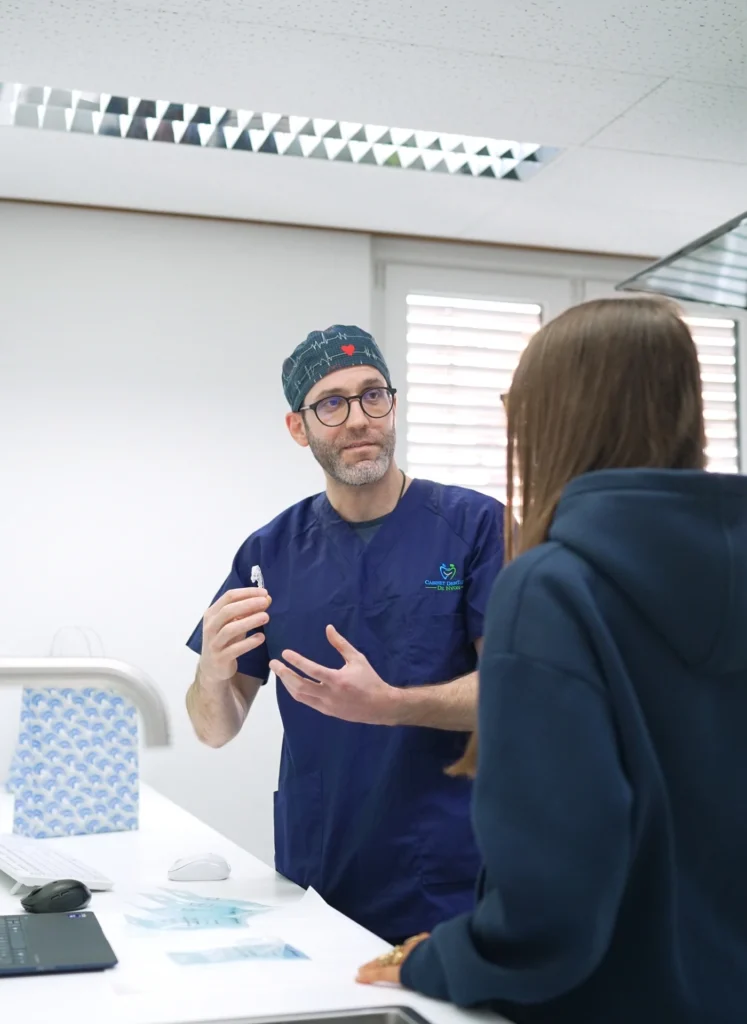

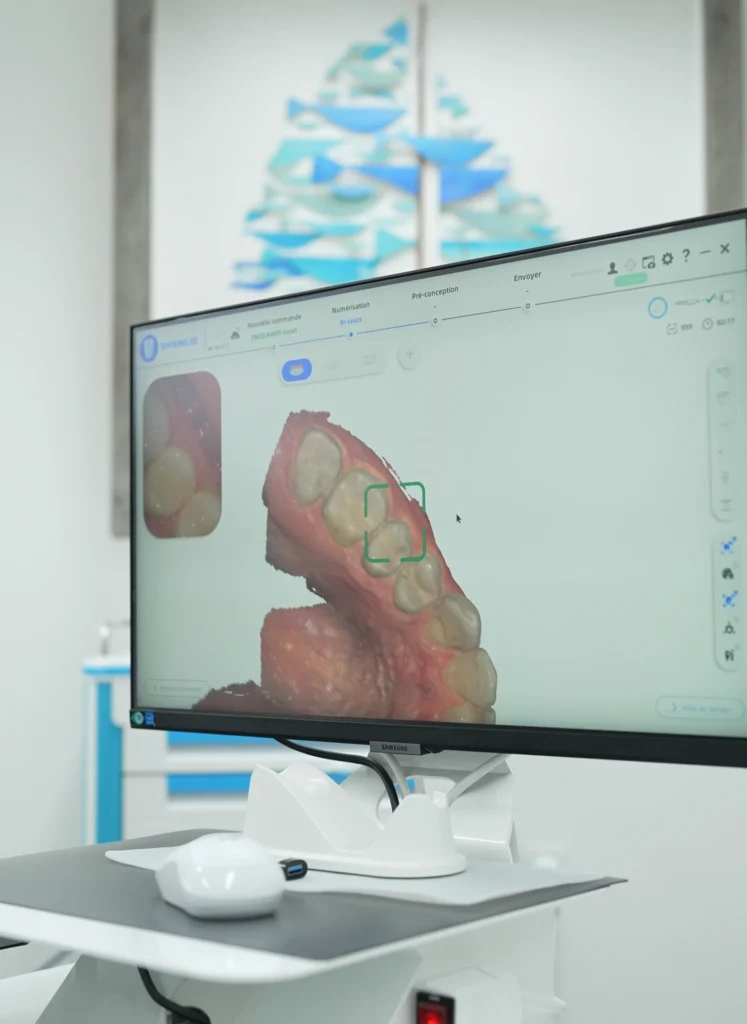


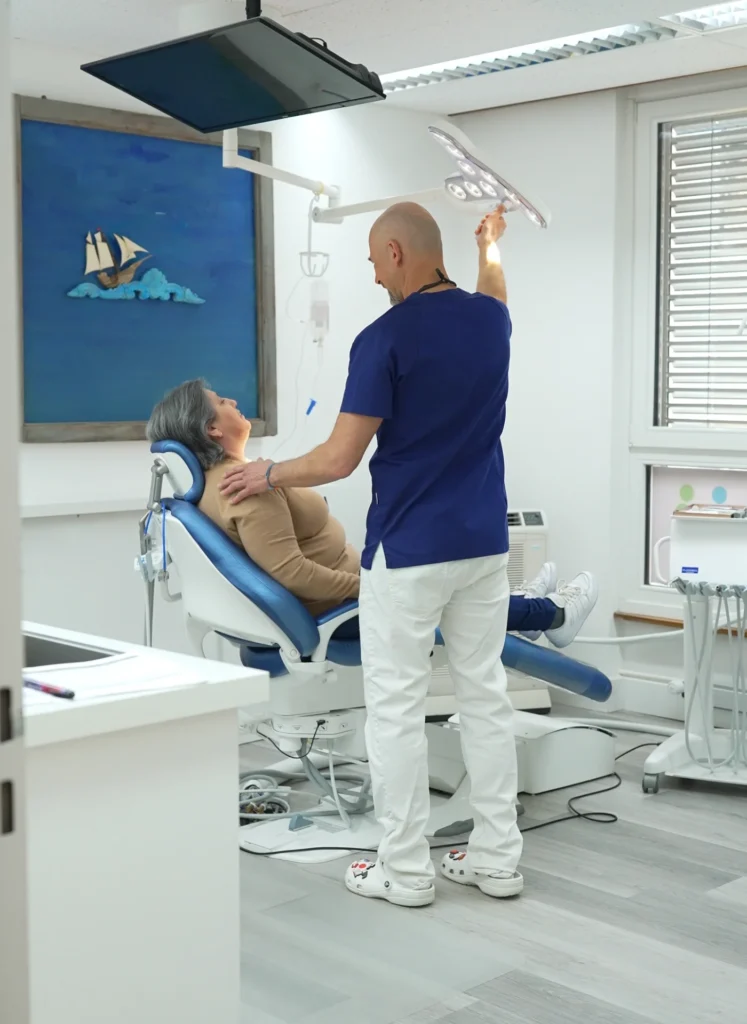
Your needs, questions and expectations deserve careful attention. At Cabinet Dentaire de Nyon, our team listens to you, explains every step clearly and helps you choose the most suitable path for your oral health.
Contact us to book your first visit, ask for information or discuss the treatment that best fits your situation.
From Geneva
Follow the route towards Nyon and continue to the city centre, in the direction of Nyon Gare. Once you arrive in central Nyon, reach Rue de la Gare 11, where the practice is located. This route is useful for patients coming from Geneva, Versoix, Coppet and nearby lakeside towns.
From Lausanne
From Lausanne, follow the route towards Nyon and continue towards Nyon Centre / Gare. The practice is located at Rue de la Gare 11, near the railway station. This direction is convenient for patients coming from Lausanne, Rolle, Gland and the surrounding area.
From Geneva
From Geneva, take the train towards Nyon station. Once you arrive at Nyon, the practice is only a short walk away, at Rue de la Gare 11. This is a practical option for patients who prefer to avoid traffic or parking in the city centre.
From Lausanne
From Lausanne, take the train towards Nyon station. After arriving at the station, walk towards Rue de la Gare 11 to reach Cabinet Dentaire de Nyon. The central location makes the practice easy to access for patients travelling from Lausanne and nearby towns.
Parking
Patients arriving by car can park near the practice in central Nyon. The most convenient options are the car parks close to Rue de la Gare and Nyon station. Since the practice is located in the city centre, we recommend allowing a few extra minutes before the appointment to park calmly and reach the clinic on foot.
Place Perdtemps Avenue Perdtemps 3 · 022 361 02 62
First hour free
1 hour: 1fr
2 hours: 2fr
3 hours: 4fr
4 hours: 8fr
Petit-Perdtemps – maximum 3 hours
1 hour: 1fr
2 hours: 3fr
3 hours: 5fr
Bel-Air Rue Neuve 16 – 020 637 20 79
1h : 2fr
2h : 9fr
3h : 20fr
Nyon Station Car Park Rue Juste Olivier 22 · 022 361 02 62
1h : 2fr
2h : 4fr
3h : 6fr
La Combe, La Combe shopping centre Chemin de Crève-cœur – first hour free
Town centre – maximum of 30, 60 or 120 minutes depending on the space
CHF 1.- per hour, flat rate
Place de la Gare – maximum 30 minutes – 7 days a week from 6.00 am to 10.00 pm
CHF 1.- per hour, flat rate
Gland:
From Gland, head towards Nyon, then continue towards Nyon Centre / Gare. Once you reach the station, go to 11 Rue de la Gare, where the Nyon Dental Practice is located. This is a convenient route for patients coming from Gland for a check-up, a dental hygiene appointment or dental treatment.
Versoix:
From Versoix, head towards Nyon via the lakeside road or the main road, then continue towards Nyon Centre / Gare. Once in the town centre, head to 11 Rue de la Gare. This route is convenient for patients coming from Versoix who wish to visit the practice in Nyon.